When discussing the convergence of AI and cryptocurrency, the most prominent projects are those tackling data collection, GPU computation, or data inference within the AI realm. Notable examples include Akash Network and Ritual Net, which distinguish themselves in the expansive AI industry by utilizing decentralization, incentivization, censorship resistance, and privacy offered by Web3.
Despite these projects innovative applications, their impact on everyday Web3 users remains limited, and they haven't significantly attracted new users to the Web3 ecosystem.
The Emergence of AI Agents
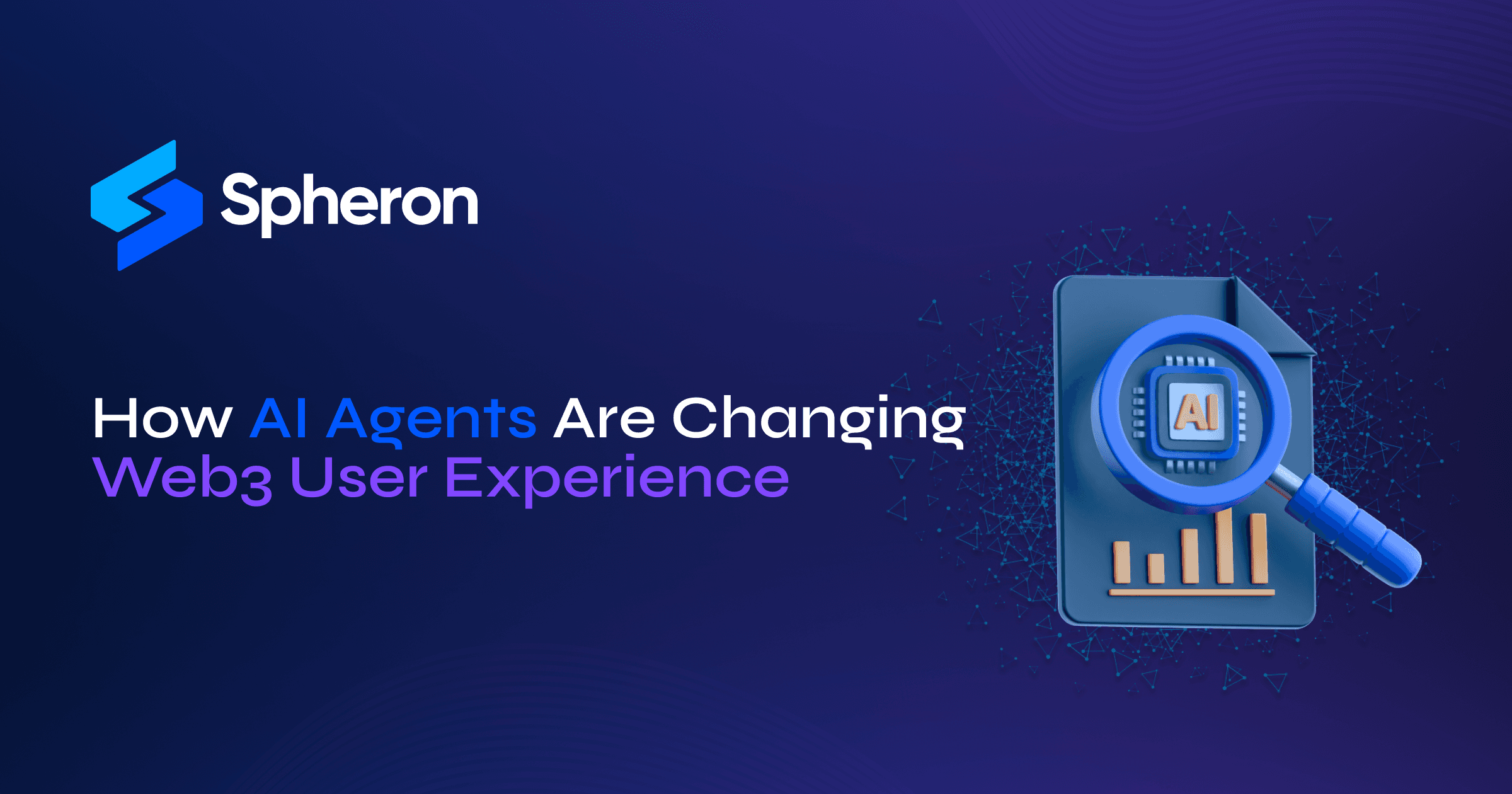
With the swift expansion of Web3, an increasing number of crypto protocols, tokens, and applications are emerging, creating a complex landscape that can overwhelm even seasoned users. This has led to a growing trend of developing AI Agents—intelligent assistants designed to simplify the use of crypto apps. These AI Agents bridge the gap between crypto and AI, addressing the challenging user experience (UX) issues in crypto. Envision a future where you could instruct an AI agent to perform on-chain tasks, and it would autonomously execute the necessary transactions.
AI Agents aim to establish an intelligence layer atop the existing DeFi infrastructure, functioning akin to bankers, investors, traders, and fund managers in the traditional finance sector, but within the Web3 context. These agents will leverage foundational DeFi components to execute on-chain transactions.
Integrating DeFi and AI promises advanced applications such as AI-driven lending, intelligent yield farming strategies, automated market making, and AI-assisted portfolio management. Beyond DeFi, AI Agents could enhance the gaming industry by providing users with assistants and pets that aid in-game navigation, thereby improving the overall gaming experience.
Categorizing AI Agents
1. Autonomous Portfolio Managers
These AI Agents manage a pool of assets from various user profiles, aiming to maximize returns by allocating assets across different DeFi strategies using off-chain AI data streams. This service is essentially portfolio management powered by AI. To ensure minimal trust is required, projects incorporate zero-knowledge (ZK) proofs to validate the AI's inferences on-chain.
2. Prompt-based AI Agents
Imagine a future where you could simply tell an AI agent what you want to achieve on-chain, and it would automatically compose and execute the necessary transactions. This is the vision for most AI Agent projects, with an anticipated future where prompt-based interactions become the preferred method for users to engage with blockchains.
Projects like Wayfinder, Brian Knows, and Aperture Finance are developing ChatGPT-like interfaces to facilitate knowledgeable blockchain transactions through conversational AI agents. These protocols utilize large language models (LLMs) to convert user prompts and intents into executable transactions.
3. Gaming AI Agents
Teams like Parallel Colony are developing gaming AI Agents that enrich the gaming experience. These agents operate within Web3 environments, interacting with players and game elements through on-chain smart contracts. They can act on behalf of the user or as in-game assistants/pets, capable of interacting and trading assets with other agents.
Some games, both Web2 and Web3, use AI to create dynamic non-playable characters (NPCs). However, this discussion focuses on AI Agents that can trade and act on user's behalf.
Detailed Overview of AI Agent Protocols
1. Wayfinder

Wayfinder is creating a navigational system for AI agents to handle tasks and simplify on-chain activities for users. By incentivizing builders with the $PROMPT token and open-sourcing development, Wayfinder aims to enhance AI agents' capabilities over time, making blockchain interactions more efficient and accessible.
2. Noya

Noya is a DeFi protocol empowering AI agents to manage liquidity across multiple blockchains. It utilizes a composable system, including a private keeper network and an AI-compatible oracle, to support various financial intents. Noya's infrastructure supports liquidity provisioning, leverage management, and borrowing rate optimization using advanced technologies like Zero-Knowledge Machine Learning (ZKML).
3. Brian Knows

Brian offers APIs for developers to integrate web3 transaction generation via user prompts. By using LLMs, Brian converts user intents into web3 transactions, executed through preferred protocols. The Brian app further explores these features and plans to expand with options like automated payment setups.
4. Aperture Finance

Aperture Finance enhances DeFi by providing liquidity management services through a user-friendly interface inspired by GPT. Users can articulate their goals in natural language, and third-party Solvers optimize processes for efficient execution.
5. Autonolas Agents

Autonolas provides a platform for creating and managing autonomous agent services that operate independently off-chain as a multi-agent system (MAS). These agents collaborate to achieve shared objectives, utilizing blockchain technology for enhanced on-chain capabilities. An example of such an agent is BabyDegen.
6. AutoTX by Polywrap

Polywrap is developing a network of specialized AI agents for web3 users and protocols. These agents use crowdsourced insights, off and on-chain data sources, task planning, and batch transactions to solve problems and make decisions. Current agents include those for payments, market research, trading, social content curation, predictions, and public goods funding. Future plans involve expanding the range of specialized agents and decentralizing their execution.
7. Parallel Colony

Parallel Studios introduces Colony, a Web3 survival game powered by AI. In Colony, autonomous AI avatars learn continuously from their environment. Players guide these avatars, which possess unique skills, to survive on a future Earth with competing colonies. The AI avatars can manage digital assets through dedicated Web3 wallets, enabling them to trade with other in-game avatars.
8. Fungi Agent

Fungi utilizes smart accounts and account abstraction to deliver a self-custodial AI Agent experience. Users can interact with Fungi through command prompts to perform on-chain transactions, create customized DeFi strategies, and even monetize these strategies by sharing them with the community.
9. Fyde Protocol

Fyde helps users grow their crypto holdings by depositing into AI-managed vaults that adjust asset allocation based on market performance and volatility. Users receive $TRSY tokens representing their share of the vault's assets, maintaining consistent liquidity across market conditions.
Conclusion
The intersection of AI and cryptocurrency creates groundbreaking innovations, particularly by developing AI agents designed to simplify and enhance user experiences within the Web3 ecosystem.
These intelligent assistants are poised to revolutionize various sectors, from DeFi to gaming, by leveraging decentralization, privacy, and incentivization inherent in Web3 technologies. Despite their potential, the current impact on everyday users remains limited, and there are challenges in achieving true autonomy and maintaining security. However, with ongoing advancements and the implementation of user-defined permissions, AI agents could become indispensable tools, transforming how users interact with blockchain applications and ultimately driving broader adoption of Web3 technologies.
Calling all developers! 🗨
As a developer, you now have the opportunity to build on Spheron's cutting-edge technology using free credits during our private testnet phase. This is your chance to experience the benefits of decentralized computing firsthand at no cost to you.
If you're an AI researcher, deep learning expert, machine learning professional, or large language model enthusiast, we want to hear from you! Participating in our private testnet will give you early access to Spheron's robust capabilities and receive complimentary credits to help bring your projects to life.
Don't miss out on this exciting opportunity to revolutionize how you develop and deploy applications. Sign up now by filling out this form: b4t4v7fj3cd.typeform.com/to/Jp58YQB2
Join us in pushing the boundaries of what's possible with decentralized computing. We look forward to working with you!